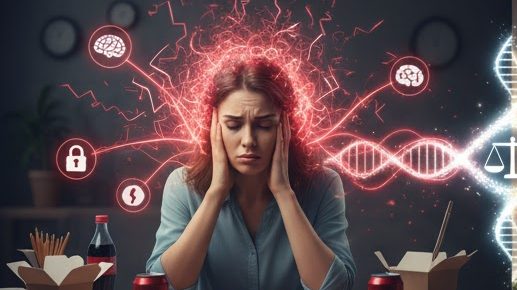
Women in America — and worldwide — experience stress at unprecedented levels. Between work pressures, caregiving demands, financial uncertainty, cultural expectations, and the mental load of balancing so many roles, chronic stress has become an everyday reality. What many people don’t realize is that stress is not only a mental or emotional experience — it directly affects women’s hormonal health, influencing everything from menstrual cycles to fertility, metabolism, sleep, mood, and long-term disease risk.
This long-form article breaks down the science, symptoms, and actionable solutions for women who want to understand how stress and hormones interact.
Why Understanding Stress and Hormones Matters
Women often hear phrases like “it’s just stress,” but stress is a biological force that can restructure hormonal pathways in the brain and body. When stress becomes chronic, hormonal imbalance can follow — affecting estrogen, progesterone, testosterone, thyroid hormones, insulin, and cortisol.
Research from multiple universities (including Harvard Medical School, Stanford University, and University of California system research groups) has shown that stress can dysregulate the Hypothalamic-Pituitary-Adrenal (HPA) axis, which is deeply connected to the reproductive system via the Hypothalamic-Pituitary-Ovarian (HPO) axis. When one axis is overwhelmed, the other can fall out of balance.
This interconnectedness makes the stress–hormone relationship especially important for women.
What This Article Covers
- How stress affects women differently
- Biological relationship between stress and hormones
- Effects on menstrual cycles, fertility, PCOS, thyroid health, weight, perimenopause, and menopause
- Signs of hormone imbalance caused by stress
- Research-backed techniques to improve hormonal resilience
- Myth vs. Fact table
- FAQs people frequently search for
Understanding Stress: Acute vs. Chronic
Not all stress is harmful. Some stress, like preparing for a deadline or reacting to danger, is a natural biological process.
Acute Stress
Short-term stress that triggers a temporary rise in cortisol and adrenaline.
Examples: job interview, exam, urgent email, sudden danger.
Chronic Stress
Long-term stress that keeps cortisol elevated for weeks or months.
Examples: financial strain, long work hours, ongoing caregiving duties, relationship conflict.
Women are disproportionately affected by chronic stress, according to multiple public health surveys, and this chronic state is where hormone disruption begins.
How Stress Affects Women’s Hormonal Health
Below is a detailed look at the scientific connections between stress and major hormonal systems.
1. Stress and the HPA–HPO Axis: The Core Hormonal Link
When the brain perceives stress, the HPA axis releases cortisol. High cortisol sends a message to the body:
“Survival first, reproduction later.”
As a result, the HPO axis, which regulates estrogen and progesterone, slows down.
This can lead to:
- Irregular periods
- Anovulation (not releasing an egg)
- PMS and PMDD worsening
- Low libido
- Fertility challenges
- Short luteal phases
- Hormonal acne
University-based research highlight:
A Stanford University endocrinology review found that chronic stress suppresses GnRH (Gonadotropin-Releasing Hormone), the hormone that kickstarts the menstrual cycle. Reduced GnRH disrupts ovulation, estrogen balance, and progesterone production.
2. Impact on the Menstrual Cycle
Stress can interrupt or alter the menstrual cycle in multiple ways:
Cycle changes triggered by chronic stress:
- Late or missed periods
- Short or unusually long cycles
- Increased cramps
- Heavier or lighter bleeding
- Intensified PMS symptoms
- Complete cycle shutdown (hypothalamic amenorrhea)
Why this happens:
Cortisol competes with reproductive hormones and can suppress estrogen and progesterone production. This affects the timing of ovulation and menstrual bleeding.
3. Stress and Fertility
Stress does not make pregnancy impossible, but it can make conception more difficult by affecting ovulation quality, egg release, and progesterone levels.
Research insight
Harvard Medical School researchers found in infertility studies that women with the highest levels of stress biomarkers took significantly longer to conceive.
Stress may also:
- Reduce libido
- Lower cervical mucus quality
- Restrict blood flow to reproductive organs
- Reduce luteal phase progesterone
Women undergoing IVF or fertility treatments are also more sensitive to stress hormones.
4. Stress and PCOS (Polycystic Ovary Syndrome)
PCOS is primarily a metabolic and hormonal condition, but stress can worsen symptoms, especially through insulin resistance.
Effects of stress on PCOS:
- Increased sugar cravings
- Higher cortisol leads to higher insulin
- Elevated insulin increases androgen levels
- Worsened acne, hair thinning, and cycle irregularity
- Increased abdominal weight
Women with PCOS often experience heightened stress responses, meaning stress management is crucial for symptom control.
5. Stress, Cortisol, and Thyroid Health
The thyroid and stress hormones are deeply linked.
Chronic stress can cause:
- Reduced T3 and T4 production
- Poor TSH feedback regulation
- Slower metabolism
- Fatigue
- Hair loss
- Sensitivity to cold
- Weight gain
University research
A University of California study found that chronic cortisol elevation can inhibit the conversion of T4 to the active hormone T3, reducing metabolic efficiency.
Women are up to eight times more likely than men to develop thyroid disorders, making stress an important factor to manage.
6. Stress and Weight Changes in Women
Cortisol affects hunger hormones such as ghrelin and leptin, leading to:
- Increased appetite
- Sugar and carbohydrate cravings
- Emotional eating
- Abdominal fat accumulation
High cortisol also keeps insulin elevated, making fat storage easier.
Women with high stress may develop stress-induced metabolic syndrome, characterized by:
- Weight gain around the midsection
- Elevated blood pressure
- Poor glucose balance
7. Stress and Perimenopause / Menopause
During perimenopause, estrogen and progesterone levels naturally fluctuate. When cortisol is high, these fluctuations intensify.
Stress can worsen:
- Hot flashes
- Anxiety
- Mood swings
- Brain fog
- Sleep issues
- Belly fat gain
Hormonal reason:
Low estrogen reduces cortisol buffering capacity, meaning women in midlife are more biologically sensitive to stress.
8. Stress and Sleep — The Hormone Disruptor
Stress raises cortisol at night, when it should be low. Poor sleep disrupts:
- Melatonin
- Growth hormone
- Ghrelin
- Leptin
- Insulin
This creates a vicious cycle:
Stress → poor sleep → worsened hormones → more stress.
Women with insomnia often have elevated evening cortisol levels.
Signs of Hormone Imbalance Caused by Stress
Top symptoms to look for:
- Irregular periods
- Unexplained weight gain
- Hair thinning or hair loss
- Fertility issues
- Severe PMS or PMDD
- Anxiety or irritability
- Fatigue despite adequate sleep
- Low libido
- Digestive issues
- Blood sugar spikes
- Hot flashes, especially in younger women
- Hormonal acne
If you experience several of these symptoms regularly, stress-driven hormonal imbalance may be a root cause.
Myth vs. Fact Table: Stress & Women’s Hormones
| Myth | Fact | Why It Matters |
|---|---|---|
| Stress only affects mood | Stress affects hormones, cycles, fertility & metabolism | Women often dismiss early hormonal symptoms |
| Only “major” stress causes hormonal issues | Even daily micro-stress can raise cortisol | Chronic low-grade stress is most common |
| Missing periods is unrelated to stress | Chronic stress can shut down ovulation | Can lead to infertility or cycle disorders |
| Stress doesn’t affect menopause | Stress intensifies menopausal symptoms | Cortisol sensitivity increases at midlife |
| PCOS only relates to insulin | Stress hormones worsen androgen levels | Stress management helps PCOS treatment |
How to Restore Hormonal Balance: Evidence-Backed Strategies (Listicle)
1. Regulate Your Nervous System Daily
Small habits can reduce cortisol significantly.
- Deep diaphragmatic breathing
- Meditation
- Grounding exercises
- Nature exposure
A Stanford Neuroscience Lab study showed slow breathing for 5 minutes reduces cortisol quickly.
2. Prioritize Sleep
Aim for 7–9 hours.
Helpful tips:
- Maintain consistent bedtimes
- Reduce screens 1 hour before bed
- Keep your room cool and dark
- Avoid caffeine after 2 PM
3. Manage Blood Sugar
Stable glucose = stable cortisol.
Tips:
- Eat protein at every meal
- Don’t skip breakfast
- Choose complex carbs (oats, beans, quinoa)
- Add fiber-rich vegetables
4. Support Nutrition for Hormonal Balance
Key nutrients include:
- Magnesium (calms the nervous system)
- Omega-3s (reduces inflammation)
- Vitamin D (supports hormone production)
- B vitamins (support stress regulation)
5. Use Exercise Wisely
Too much high-intensity exercise can raise cortisol.
Recommended:
- Strength training 2–3x/week
- Yoga or Pilates
- Walking 30–45 minutes daily
6. Create Emotional Boundaries
Women frequently experience emotional labor overload, leading to chronic stress.
Strategies:
- Delegate household tasks
- Say “no” to non-essential obligations
- Set communication limits
7. Consider Therapy or Counseling
Cognitive-behavioral therapy (CBT) is shown to reduce stress hormone levels over time.
8. Hormone Testing (When Necessary)
Talk to your doctor about:
- Cortisol saliva tests
- Thyroid panel
- Progesterone (day 21 test)
- Estrogen levels
- A1C and fasting insulin for metabolic health
FAQs — What Women Are Searching For
1. Can stress really cause missed periods?
Yes. Chronic stress suppresses the hormones needed for ovulation, which can lead to late or missed periods.
2. Does stress cause early menopause?
Stress doesn’t cause early menopause, but it can worsen symptoms and may trigger irregular cycles that mimic perimenopause.
3. Can stress make PCOS worse?
Absolutely. Stress increases cortisol and insulin, both of which raise androgen levels and worsen PCOS symptoms.
4. How long does it take to rebalance hormones after stress?
For many women, improvements occur within 4–12 weeks after consistent stress reduction, though it varies by individual and severity.
5. What supplements help with stress hormones?
Common options include magnesium glycinate, omega-3 fatty acids, and adaptogens (ashwagandha, rhodiola), but always consult a healthcare provider first.
6. Can stress affect fertility even if my periods are normal?
Yes. Stress can affect egg quality, implantation, cervical mucus, and progesterone levels even when cycles appear regular.