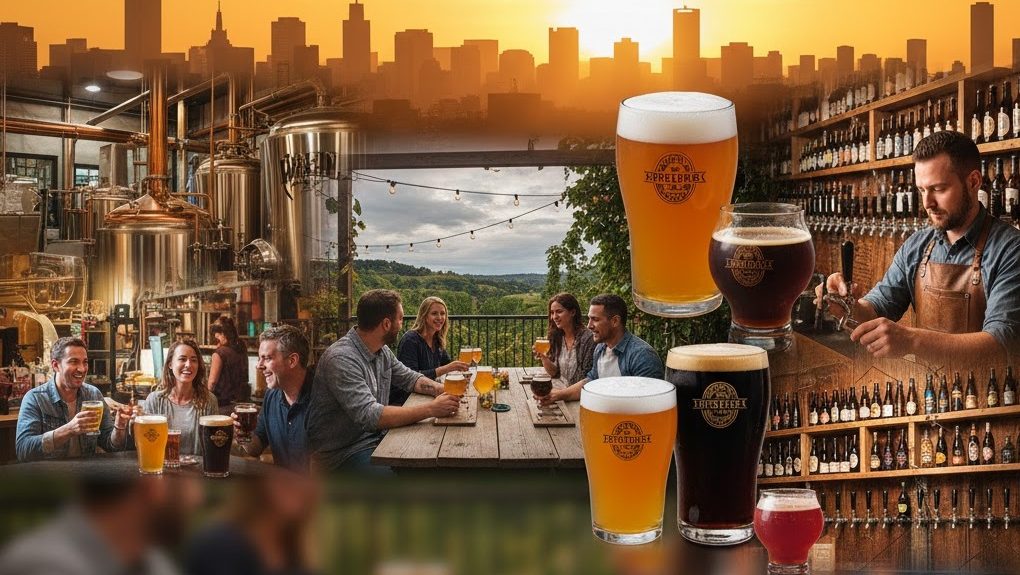
America’s craft beer scene is more than a trend—it’s a living, evolving culture rooted in science, regional identity, and community. From hop-forward IPAs on the West Coast to barrel-aged stouts in the Midwest and crisp lagers inspired by European traditions, the best breweries in the United States reflect innovation balanced with heritage. Whether you’re planning a beer-focused road trip, researching iconic American breweries, or simply curious about what defines excellence in modern brewing, this guide delivers a comprehensive, SEO-optimized exploration with practical insights.
You’ll find curated lists, regional spotlights, comparison tables, research-backed explanations, and FAQs that answer what beer lovers are searching for—all written with an empathetic, professional tone.
Why the U.S. Craft Beer Industry Leads the World
The United States hosts over 9,000 breweries, more than any other country. According to research from UC Davis (home to one of the world’s leading brewing science programs), American brewers benefit from a unique blend of agricultural diversity, scientific education, and entrepreneurial culture. These factors have accelerated experimentation with hops, yeast strains, and fermentation techniques.
Key reasons U.S. breweries stand out:
- Access to diverse hop varieties (Pacific Northwest dominance)
- University-led fermentation and food science research
- Consumer openness to new styles
- Strong local and regional support for independent breweries
What Defines “The Best” Breweries?
“Best” doesn’t mean biggest. It reflects consistent quality, influence, innovation, and customer trust.
Criteria used in this guide:
- Beer quality and consistency
- Innovation and style leadership
- Industry influence and awards
- Longevity and reputation
- Visitor experience and community impact
Regional Beer Styles Across the United States
| Region | Signature Styles |
|---|---|
| West Coast | IPAs, Double IPAs, experimental hops |
| Midwest | Stouts, lagers, farmhouse ales |
| Northeast | Hazy IPAs, mixed fermentation |
| South | Sours, pastry stouts, creative adjuncts |
| Mountain West | Clean lagers, barrel-aged beers |
The Best Breweries in the United States (By Reputation & Influence)
Sierra Nevada Brewing Co. (California)
Founded: 1980
Known for: Pale Ale, sustainability leadership
Sierra Nevada is often credited with launching the American craft beer revolution. Its Pale Ale introduced generations to Cascade hops and balanced bitterness.
Why it matters:
- Pioneered hop-forward American ales
- Leader in solar-powered and sustainable brewing
- Studied by brewing programs at UC Davis for process efficiency
Russian River Brewing Company (California)
Known for: Pliny the Elder, sour ales
Russian River helped define modern IPA culture and American wild ales.
Why it stands out:
- World-famous Double IPAs
- Advanced barrel-aging and wild fermentation
- Influenced countless West Coast brewers
Tree House Brewing Company (Massachusetts)
Known for: Hazy IPAs
Tree House played a major role in shaping the New England IPA style.
Why it stands out:
- Juice-forward, low-bitterness IPAs
- Cult-like following with limited releases
- Consistently rated among the top breweries in the U.S.
The Alchemist (Vermont)
Known for: Heady Topper
This small brewery sparked a national haze movement.
Why it matters:
- Redefined IPA mouthfeel and aroma
- Emphasized freshness and hop preservation
- Frequently referenced in brewing science research on dry hopping
Bell’s Brewery (Michigan)
Known for: Two Hearted Ale
Bell’s Two Hearted Ale is often cited as one of the best-balanced IPAs ever brewed.
Why it stands out:
- Consistent quality across decades
- Focus on yeast health and fermentation control
- Collaboration with academic brewing programs
New Belgium Brewing (Colorado)
Known for: Fat Tire, sour beers
Employee-owned and sustainability-driven, New Belgium helped bring craft beer to the mainstream.
Why it matters:
- Early adopter of sour beer programs
- Carbon-neutral brewing initiatives
- Studied in sustainability courses at Colorado State University
Founders Brewing Co. (Michigan)
Known for: KBS, Breakfast Stout
Founders is a leader in high-gravity and barrel-aged beers.
Why it stands out:
- Complex malt-forward profiles
- Long-term barrel-aging expertise
- Influence on American stout culture
Dogfish Head Craft Brewery (Delaware)
Known for: Experimental beers
Dogfish Head blends culinary creativity with brewing science.
Why it matters:
- Pioneered continuous hopping
- Incorporates ancient and global ingredients
- Collaborates with food science departments
Deschutes Brewery (Oregon)
Known for: Black Butte Porter
Deschutes helped popularize dark beers in the American market.
Why it stands out:
- Balanced approach to innovation
- Strong regional identity
- Frequently cited in hop utilization studies
Allagash Brewing Company (Maine)
Known for: Belgian-style wheat beers
Allagash is the gold standard for Belgian-inspired brewing in the U.S.
Why it matters:
- Precision fermentation techniques
- Strong emphasis on yeast management
- Used as a teaching model in fermentation science programs
Table: Iconic Breweries and Their Signature Beers
| Brewery | State | Signature Beer | Style |
|---|---|---|---|
| Sierra Nevada | CA | Pale Ale | American Pale Ale |
| Russian River | CA | Pliny the Elder | Double IPA |
| Tree House | MA | Julius | Hazy IPA |
| The Alchemist | VT | Heady Topper | Hazy IPA |
| Bell’s | MI | Two Hearted Ale | IPA |
| New Belgium | CO | Fat Tire | Amber Ale |
| Founders | MI | KBS | Barrel-aged Stout |
| Dogfish Head | DE | 90 Minute IPA | IPA |
| Deschutes | OR | Black Butte Porter | Porter |
| Allagash | ME | Allagash White | Belgian Wheat |
The Role of Science in Great Brewing
University Research & Brewing Excellence
Several U.S. universities play a critical role in shaping top-tier breweries:
- UC Davis: Global leader in brewing and fermentation science
- Oregon State University: Hop breeding and sensory science
- Colorado State University: Fermentation and sustainability research
Studies from these institutions show that yeast management, oxygen control, and water chemistry have a greater impact on beer quality than most consumers realize. Many elite breweries actively collaborate with university labs to refine processes and maintain consistency.
Emerging Breweries to Watch
While legacy breweries dominate headlines, newer breweries are shaping the future.
Rising stars include:
- Other Half Brewing (NY) – Modern hop experimentation
- Monkish Brewing (CA) – Hazy and Belgian hybrids
- Toppling Goliath (IA) – Award-winning IPAs and stouts
- Hill Farmstead (VT) – Farm-based brewing philosophy
These breweries emphasize local ingredients, small-batch precision, and community engagement.
Planning a Brewery Visit: Practical Tips
- Visit midweek for less crowding
- Ask about limited or taproom-only releases
- Respect freshness windows for IPAs
- Store beer cold and upright when possible
- Take brewery tours to understand process differences
FAQs: People Also Ask
What is the best brewery in the United States?
There is no single answer, but Sierra Nevada, Russian River, Tree House, and The Alchemist are consistently ranked at the top.
Which U.S. state has the best breweries?
California, Michigan, Colorado, Oregon, and Vermont are often cited for quality and variety.
Are craft breweries scientifically different from large breweries?
Yes. Craft breweries often experiment more with yeast strains, fermentation temperatures, and ingredient sourcing—areas heavily studied in university brewing programs.
What beer style is America best known for?
The IPA, especially West Coast and New England styles, is America’s most influential beer contribution globally.
Do breweries work with universities?
Many top breweries collaborate with universities for yeast research, hop development, and sustainability practices.
How to Choose the Best Brewery for Your Taste
- Prefer bitterness? Look for West Coast IPAs
- Like smooth, juicy beers? Try New England IPAs
- Enjoy dark beers? Seek Midwest stout specialists
- Want tradition? Explore Belgian-style producers
- Love experimentation? Visit culinary-inspired breweries