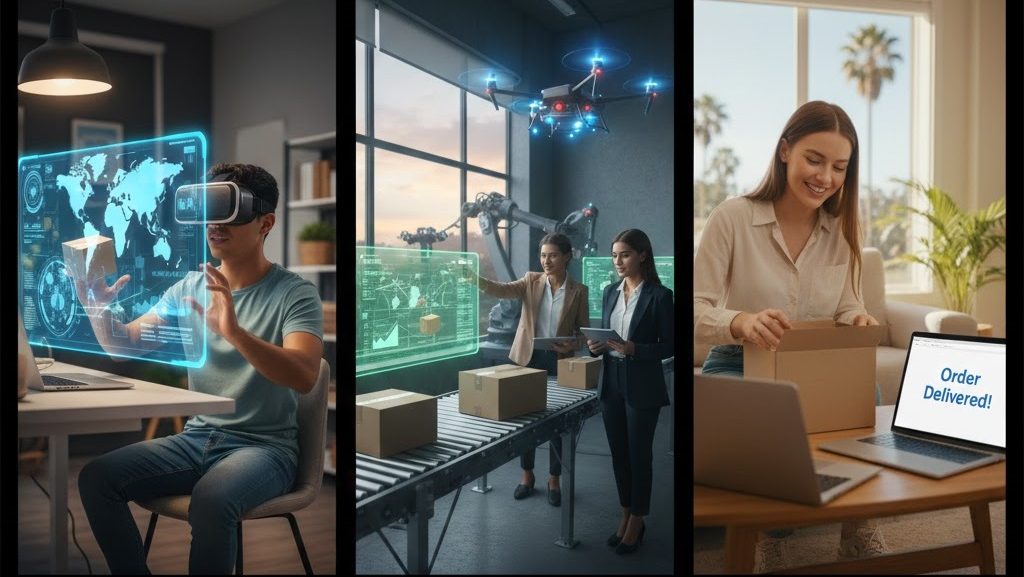
Dropshipping has been declared “dead” more times than most online business models — yet it continues to attract thousands of American entrepreneurs every year. In recent year, dropshipping in the USA looks very different from the hype-driven model of the late 2010s. Rising ad costs, smarter consumers, stricter platforms, and faster logistics have changed the rules.
So the real question is no longer “Does dropshipping work?” but rather:
Does dropshipping still work in the USA — and for whom?
This in-depth guide breaks down the current reality of dropshipping, explains what has changed, what still works, what no longer does, and how U.S. entrepreneurs can build a sustainable dropshipping business today. The goal is clarity, not hype — with practical, research-backed insights and actionable steps you can actually use.
What Is Dropshipping? (A Clear Definition)
Dropshipping is an e-commerce fulfillment model where the seller does not keep products in inventory. Instead:
- A customer places an order on your online store
- You forward the order to a third-party supplier
- The supplier ships the product directly to the customer
Your profit is the difference between the retail price and the supplier cost.
In this year, dropshipping has evolved into a logistics and marketing strategy, not a “get rich quick” scheme.
Why Dropshipping Became Popular in the U.S.
Dropshipping exploded in popularity because it solved several major barriers to entrepreneurship:
- Low startup costs
- No need for inventory storage
- Ability to test products quickly
- Remote-friendly business model
- Easy integration with platforms like Shopify
Research from U.S. business schools studying digital entrepreneurship shows that low-barrier entry models like dropshipping increase participation in small business creation — but also increase competition. This naturally leads to market saturation and thinner margins over time.
What Has Changed About Dropshipping ?
1. American Consumers Are More Sophisticated
U.S. shoppers are:
- More price-aware
- More delivery-speed conscious
- More skeptical of low-quality brands
- More influenced by reviews and social proof
Generic stores selling identical products with long shipping times no longer perform well.
2. Advertising Costs Are Higher
Facebook, Instagram, TikTok, and Google Ads are more competitive than ever.
- Cost-per-click (CPC) has increased
- Creative fatigue happens faster
- Platforms prioritize branded, high-trust advertisers
This doesn’t mean paid ads are impossible — it means lazy ads don’t work anymore.
3. Shipping Expectations Are Faster
Thanks to Amazon Prime and Walmart+, American consumers expect:
- 3–7 day shipping
- Real tracking numbers
- Clear return policies
Dropshippers relying solely on overseas suppliers with 15–30 day delivery times struggle .
4. Platforms Enforce Stricter Rules
Payment processors and ad platforms now require:
- Transparent business information
- Clear shipping and refund policies
- Consistent product quality
- Brand legitimacy
This shift benefits serious entrepreneurs — and weeds out scammy operations.
Does Dropshipping Still Work in the USA ?
Yes — but only if you treat it like a real business.
Dropshipping still works for U.S. entrepreneurs who:
- Build a brand (not a generic store)
- Use reliable suppliers (often U.S.-based or hybrid)
- Focus on customer experience
- Invest in content, trust, and long-term marketing
It does not work for those looking for fast money with minimal effort.
Dropshipping Models That Still Work
1. Branded Dropshipping (Most Sustainable)
Instead of selling random products, you:
- Focus on a specific niche
- Create a branded store
- Customize packaging (when possible)
- Build trust and repeat customers
Examples:
- Fitness recovery brands
- Pet accessories with educational content
- Home organization solutions
This model aligns with research from U.S. universities showing that brand trust and perceived value strongly influence online purchasing decisions.
2. U.S.-Based Dropshipping Suppliers
Using suppliers with warehouses in the U.S. allows:
- Faster shipping (2–7 days)
- Easier returns
- Higher customer satisfaction
Margins may be slightly lower, but conversion rates are higher.
3. Hybrid Dropshipping + Inventory
Many successful stores in this year :
- Dropship initially to test products
- Bulk order best-sellers
- Use third-party logistics (3PL) for fulfillment
This hybrid model reduces risk while increasing long-term profitability.
4. Content-Driven Dropshipping
Instead of relying only on ads, sellers use:
- SEO blog content
- YouTube videos
- TikTok educational content
- Email newsletters
University research on digital commerce consistently shows that content-driven acquisition reduces customer acquisition cost (CAC) over time.
Dropshipping Models That No Longer Work Well
- One-product “copy-paste” stores
- Stores with fake scarcity timers
- Products with misleading claims
- 20–30 day shipping times to U.S. customers
- No customer support or brand identity
These models fail due to consumer distrust and platform enforcement.
Table: Dropshipping in 2018 vs Recent Year
| Aspect | 2018 Dropshipping | This Year Dropshipping |
|---|---|---|
| Competition | Low–Medium | High |
| Consumer awareness | Low | Very high |
| Shipping tolerance | 15–30 days | 2–7 days |
| Branding importance | Optional | Essential |
| Paid ads | Cheap & forgiving | Expensive & precise |
| Trust requirements | Minimal | Mandatory |
| Sustainability | Short-term | Long-term focused |
How Much Does It Cost to Start Dropshipping in the USA ?
Typical Startup Costs
- Shopify or e-commerce platform: $29–$39/month
- Domain & email: $15–$30/year
- Apps & tools: $20–$100/month
- Initial ads/testing: $300–$1,500
- Branding & content (optional): varies
Estimated realistic startup budget: $500–$2,500
Profit Margins : What’s Realistic?
Margins depend on niche, supplier, and marketing strategy.
- Low-end: 10–20% (commodity products)
- Average: 25–40% (branded niche stores)
- High-end: 50%+ (unique positioning, bundles, content-driven traffic)
Dropshipping is no longer about massive margins — it’s about volume, retention, and brand equity.
Step-by-Step: How to Start Dropshipping in the USA
Step 1: Choose a Problem-Solving Niche
Focus on niches where products solve real problems:
- Health accessories (non-medical)
- Pet care
- Home organization
- Outdoor and travel gear
Avoid fads without long-term demand.
Step 2: Validate Products Properly
Use:
- Google Trends
- Amazon reviews (to find pain points)
- TikTok organic engagement
- Reddit and forums
Validation beats impulse every time.
Step 3: Choose Reliable Suppliers
Look for:
- U.S. warehouses
- Consistent quality
- Fast processing times
- Clear return handling
Platforms include U.S.-based wholesalers, hybrid suppliers, and vetted dropshipping networks.
Step 4: Build a Trust-Focused Store
In recent year, trust elements are critical:
- Clear About Us page
- Transparent shipping times
- Realistic product descriptions
- Accessible customer support
Step 5: Market With Strategy, Not Hype
Combine:
- Paid ads (short-form video)
- SEO blog content
- Influencer partnerships
- Email marketing
Over time, organic traffic reduces dependence on ads.
Legal Considerations for U.S. Dropshippers
To operate legally in the USA:
- Register an LLC or sole proprietorship
- Obtain an EIN (if needed)
- Collect sales tax where required
- Follow FTC advertising guidelines
- Use accurate product claims
Operating legally builds long-term credibility and payment processor trust.
Psychological Factors: Why Dropshipping Still Appeals
Research from U.S. universities studying entrepreneurship psychology shows that people are drawn to business models that offer:
- Autonomy
- Flexibility
- Low financial risk
- Learning opportunities
Dropshipping remains attractive because it provides a low-risk environment to learn digital business skills, even if it’s not a guaranteed path to wealth.
Listicle: 9 Reasons Dropshipping Still Works (If Done Right)
- Low barrier to entry
- Ability to test ideas quickly
- No inventory risk upfront
- Scalable with branding
- Works well with content marketing
- Can transition into private labeling
- Ideal for niche audiences
- Flexible location independence
- Teaches transferable business skills
Dropshipping vs Other Models
| Model | Risk | Capital Needed | Control | Scalability |
|---|---|---|---|---|
| Dropshipping | Low–Medium | Low | Medium | High |
| Amazon FBA | Medium | Medium–High | Low | High |
| Private Label | High | High | Very high | Very high |
| Print-on-Demand | Low | Low | Medium | Medium |
Dropshipping remains one of the most accessible entry points.
Common Myths About Dropshipping
- “Dropshipping is dead” → Outdated model is dead; smart model isn’t
- “You need thousands to start” → Not true, but underfunding hurts
- “Anyone can succeed easily” → False; skills matter
- “Ads alone guarantee profit” → Not anymore
Frequently Asked Questions (FAQs)
Is dropshipping still profitable in the USA ?
Yes, but profitability depends on branding, supplier quality, and marketing strategy. Generic stores rarely succeed.
Can beginners still start dropshipping?
Yes. Dropshipping remains beginner-friendly, but expectations must be realistic.
Do I need to use Shopify for dropshipping?
No, but Shopify remains one of the easiest platforms due to integrations and scalability.
Is U.S.-based dropshipping better?
For American customers, yes. Faster shipping improves conversions and trust.
How long does it take to see results?
Most sustainable stores take 3–6 months of consistent effort before becoming profitable.
Is dropshipping legal in the USA?
Yes, when done correctly with proper business registration, taxes, and transparent marketing.