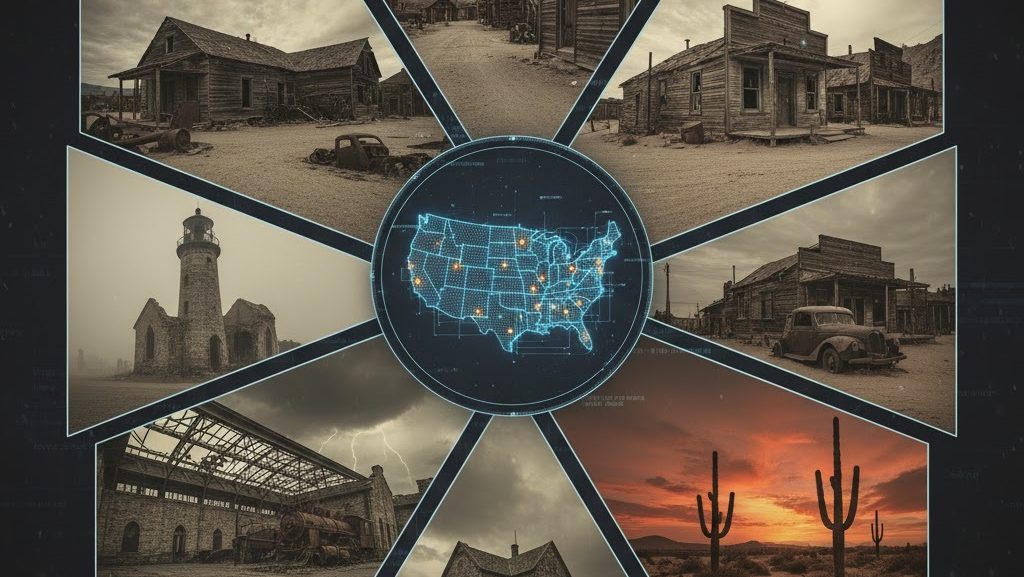
America’s landscape is dotted with forgotten settlements—towns once brimming with life, now standing silent with abandoned buildings, creaking saloons, and echoes of history preserved in dust. These ghost towns aren’t just relics of the past; they’re immersive windows into American mining booms, frontier hardships, railroad expansion, and shifting economies.
Today, ghost towns across the United States attract travelers seeking adventure, photography opportunities, and a deeper understanding of American heritage. This guide explores the best ghost towns to visit in the U.S., featuring a detailed list of destinations, travel tips, scientific insights into why humans are drawn to abandoned places, and helpful FAQs.
Why Ghost Towns Capture the Human Imagination
Ghost towns invite curiosity: Why were these places abandoned? What stories linger in the empty corridors? What remains from the people who once lived there?
Psychological and anthropological research offers fascinating context:
➤ Research Insight: The Fascination With Ruins
A study from the University of Cambridge found that humans are naturally drawn to ruins because they stimulate imagination, historical curiosity, and meaning-making. Participants expressed increased emotional engagement when exploring abandoned environments because such spaces invite personal interpretation and evoke nostalgia.
Another study from the University of Wisconsin–Milwaukee notes that ruins foster a unique “aesthetic of decay” and provide an escape from modern overstimulation, making them appealing destinations for travelers seeking authenticity or experiences off the beaten path.
This explains why ghost towns—filled with untouched artifacts and unaltered landscapes—feel like outdoor museums of American life.
The Best Ghost Towns to Visit in the U.S. (Listicle Guide)
Discover some of America’s most iconic, eerie, and photogenic abandoned towns—many preserved as state or national historic sites.
1. Bodie, California – The Quintessential Old West Ghost Town
Bodie is often considered the most authentic ghost town in America. Once home to 10,000 residents during the Gold Rush, it now sits frozen in “arrested decay,” meaning everything remains exactly as it was left—tables, merchandise, mining tools, even wallpaper.
Why Visit:
- Preserved buildings with interiors untouched since the early 1900s
- Ideal for photographers and history lovers
- State park with guided tours and ranger programs
Best For: Families, history buffs, Old West enthusiasts
2. St. Elmo, Colorado – A Photogenic Mountain Ghost Town
St. Elmo is one of Colorado’s best-preserved ghost towns, tucked deep in the Rocky Mountains. Many buildings are open in the summer, offering a close-up view of general stores, saloons, and old mining cabins.
Why Visit:
- Famous chipmunks that gather near the general store
- Scenic mountain roads perfect for hiking and ATV trips
- Popular for fall foliage photography
Best For: Mountain lovers, families, adventure travelers
3. Rhyolite, Nevada – Desert Ruins & the Goldwell Open Air Museum
Located near Death Valley, Rhyolite features dramatic ruins like the three-story Cook Bank building. It’s also home to one of America’s most unusual art installations—the Goldwell Open Air Museum.
Why Visit:
- Jaw-dropping concrete sculptures
- Classic desert ghost town atmosphere
- Incredible sunset photography
Best For: Art lovers, road trippers, desert explorers
4. Jerome, Arizona – The “Wickedest Town in the West”
Unlike many ghost towns, Jerome is part ghost town, part living community. Built along a steep mountainside, it was once known for mining… and mischief.
Why Visit:
- Haunted hotels and local ghost tours
- Vibrant arts community
- Near Sedona, making it a great add-on to a regional road trip
Best For: Travelers seeking ghost stories and nightlife
5. Bannack, Montana – A Frozen Frontier Town
Bannack was the site of Montana’s first major gold discovery. Today it remains one of the most intact frontier towns—over 60 buildings still stand.
Why Visit:
- Annual “Bannack Days” with reenactments
- The famous Hotel Meade, rumored to be haunted
- Numerous trails and wildlife sightings
Best For: History lovers, families, ghost-tour fans
6. Kennecott, Alaska – A Remote Copper Mining Ghost Town
Kennecott is both remote and breathtaking, nestled in Wrangell–St. Elias National Park. Visitors can explore the massive red-painted mill building and mining camp.
Why Visit:
- Huge, photogenic industrial ruins
- Glacier hiking nearby
- Stunning natural landscapes
Best For: Adventure travelers, national park explorers
7. Terlingua, Texas – Desert Ghost Town Meets Modern Art Scene
Terlingua blends classic ghost town charm with quirky modern additions like art galleries, desert bars, and music venues.
Why Visit:
- Near Big Bend National Park
- Popular “Day of the Dead” celebration
- Abandoned ruins and cactus-lined trails
Best For: Road trippers, desert lovers, culture explorers
8. Calico, California – A Restored Silver-Mining Town
Calico is a restored ghost town aimed at tourists, but still packed with Old West charm.
Why Visit:
- Mine tours
- Ghost tours
- Fun reenactments and photo opportunities
Best For: Families, Old West fans, road trippers
9. Garnet, Montana – An Isolated, Completely Preserved Ghost Town
If you want quiet, Garnet is the place. This ghost town sits deep in Montana forestland, with many buildings still filled with original furnishings.
Why Visit:
- No crowds
- Fascinating educational exhibits
- Stunning forest views
Best For: Solitude seekers, nature lovers
10. Thurmond, West Virginia – A Railroad Town Lost in Time
Thurmond was once a booming railroad hub; today, it’s largely untouched.
Why Visit:
- Perfectly preserved train depot
- Located in New River Gorge National Park
- Rich industrial history
Best For: Train lovers, photographers
11. Cahawba, Alabama – A Haunting, Historic Town Beneath the Trees
Cahawba was Alabama’s first state capital but was abandoned after repeated floods.
Why Visit:
- Ghost tours
- Overgrown ruins with haunting beauty
- Civil War historical sites
Best For: History lovers, paranormal enthusiasts
12. Silver City, Idaho – One of the West’s Best-Preserved Mining Towns
Many original buildings remain, including saloons, mining structures, and homes.
Why Visit:
- Remote and peaceful
- Beautiful mountain setting
- Intact 19th-century architecture
Best For: Off-grid travelers, history fans
Table: Quick Comparison of Top Ghost Towns in the U.S.
| Ghost Town | State | Best Feature | Difficulty to Reach | Ideal For |
|---|---|---|---|---|
| Bodie | California | Frozen Old West authenticity | Moderate | History lovers |
| St. Elmo | Colorado | Mountain photography | Easy | Families |
| Rhyolite | Nevada | Art installations | Easy | Photographers |
| Jerome | Arizona | Haunted hotels | Easy | Ghost-story seekers |
| Bannack | Montana | Reenactments | Easy | Families |
| Kennecott | Alaska | Epic industrial ruins | Hard | Adventure travelers |
| Terlingua | Texas | Desert culture | Easy | Road trippers |
| Calico | California | Mine tours | Easy | Kids & families |
| Garnet | Montana | Peace & preservation | Moderate | Nature lovers |
| Thurmond | West Virginia | Railroad history | Easy | Photographers |
What to Know Before Visiting a Ghost Town (Important Tips)
1. Check accessibility
Some ghost towns require:
- 4WD vehicles
- Hiking
- Seasonal access (snow or flooding may block roads)
2. Bring plenty of water and snacks
Many ghost towns are in remote desert or mountain environments.
3. Respect preservation rules
Most historic ghost towns prohibit:
- Removing artifacts
- Climbing unstable buildings
- Littering or graffiti
4. Wear proper shoes
Expect dirt, rocks, broken wood, and old metal fragments.
5. Pack a flashlight
Exploring buildings—even during the day—can be dark.
6. Prepare for lack of cell service
Always download offline maps.
Scientific Insight: Why Abandoned Places Reduce Stress (Surprisingly)
A 2020 study from the University of Arizona found that exploring quiet, remote environments—like ghost towns—can lower cortisol levels (stress hormones). The combination of:
- silence
- open space
- slow pace
- lack of modern overstimulation
helps the mind enter a restorative state similar to meditation.
This may explain why many travelers describe ghost towns as peaceful, not only eerie.
Best Times of Year to Visit Ghost Towns
| Season | Pros | Cons |
|---|---|---|
| Spring | Mild weather, wildflowers | Possible mud or floods |
| Summer | Long daylight hours | Heat in desert towns |
| Fall | Best photography, vibrant colors | Early winter storms in mountains |
| Winter | Moody atmosphere, fewer crowds | Snow-blocked access in some states |
Travel Safety Tips for Exploring Ghost Towns
- Avoid entering unstable buildings
- Travel with at least one companion
- Let someone know your plans
- Carry a first-aid kit
- Watch for wildlife (snakes, bears, desert creatures)
- Don’t explore at night without proper gear
How to Photograph Ghost Towns (Pro Tips)
- Golden hour is best for dramatic lighting
- Use a wide-angle lens for interiors
- Shoot textures: peeling paint, rust, weathered wood
- Try black-and-white edits for mood
- Capture both details and full street views
FAQs About Visiting Ghost Towns in the U.S.
1. Are ghost towns safe to visit?
Yes, most designated ghost towns are safe. However, avoid unstable structures and always follow posted rules.
2. Are ghost towns actually haunted?
Some have ghost stories and local legends, especially towns like Jerome or Bannack. Whether they’re truly haunted is up to the visitor to decide.
3. Do I need a special vehicle to reach ghost towns?
Some require 4WD, especially in Colorado, Idaho, and Alaska. Always check local road conditions.
4. Can I explore ghost town buildings?
In some ghost towns, yes. In others, buildings are locked or unsafe. Respect closures—they are for your protection.
5. Are ghost towns family-friendly?
Many are great for kids, especially towns like Calico or St. Elmo. Use caution in towns with unstable structures.
6. Do I need to pay to visit a ghost town?
Some are part of state parks and require small entrance fees, while others are free or privately owned.
7. What should I bring on a ghost town road trip?
Water, snacks, sturdy shoes, a flashlight, sunscreen, a camera, and offline maps.